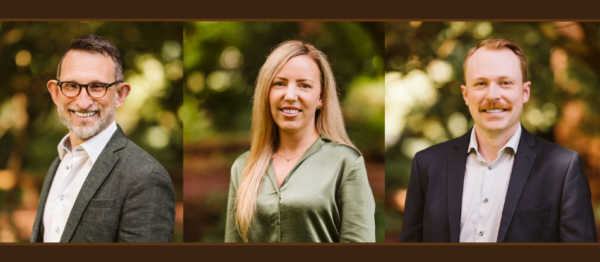
Sequoia Legal partners Christopher Devlin, Kajia Whelan, and Lorenzo Rose represented the Intervenors, Tseshaht First Nation, in this important Aboriginal Title case.
Articles
Appeal Court grants Aboriginal Title to part of Nootka Island
The BC Court of Appeal declares Nuchatlaht's Aboriginal Title of entire claimed area - 210 square kms on Nootka Island.
What the Court Decided
On April 2, 2026, the BC Court of Appeal released its reasons for judgment in The Nuchatlaht v. British Columbia, 2026 BCCA 137.[1] The decision completely reversed the two trial court decisions and awarded the Nuchatlaht the entire area that they claimed at trial, being the north end of Nootka Island.
The three justices, writing as “The Court”, determined the trial judge had made palpable and overriding errors in how they applied the test for sufficiency of occupation prior to 1846. They also found that the trial judge misapprehended key pieces of evidence.
The key theme of the decision is that evidence of boundaries can be used to establish sufficiency of occupation over entire tracts of land, especially where those boundaries are consistent with evidence of the Indigenous legal and governance traditions in place prior to 1846 (see paragraphs 192-198). The justices found the artificial boundaries adopted by the trial judge would result in the Nuchatlaht’s territory being cut off or segmented in a manner that did not reflect the Aboriginal perspective prior to 1846 (see paragraphs 115 and 165).
The Court took issue with the trial judge’s reliance on one ethnographer’s comment that Nuu-chah-nulth people were unfamiliar with remote inland areas, clarifying: “While the evidence was the Nuu-chah-nulth were primarily a marine-oriented culture, they could not have sustained that life without the use of forest resources” (paragraph 32).
Importance of the Decision
The Nuchatlaht’s claim relied solely on the historical, ethnohistorical and archaeological record to prove their claim and did not adduce any oral history evidence. The result at trial was a decision that applied a “postage stamp” approach to Aboriginal title and raised questions about the ability of marine-oriented cultures to prove title.
The Court’s decision is a welcome change from the discouraging results at trial and could greatly assist future Aboriginal title claims. We note a few cautions, however, at this time.
- There was no evidence of overlapping claims to the Nuchatlaht Claim Area. This greatly assisted the Court in assuming that the culturally modified trees found in the Claim Area were likely made by the Nuchatlaht rather than by some other group.
- This decision will undoubtedly be appealed to the Supreme Court of Canada by British Columbia. The pendulum on Indigenous issues in the provincial government is swinging away from reconciliation towards litigation again. It seems inconceivable, given the current political climate post-Cowichan Tribes and post-Gitxaala (the DRIPA case), that British Columbia would not seek leave to appeal to the Supremes.
With respect to the pending Cowichan Tribes appeal, the Cowichan Tribes will undoubtedly argue a similar “postage stamp” approach was taken at trial in their own case. This decision signals the Court may be inclined to expand the footprint of the Cowichan Tribes’ title declaration, should their appeal succeed.
More Articles
Jul. 6, 2026
Kajia Whelan examines last week's BC Supreme Court decision dismissing Montrose's application in Cowichan Tribes v. Canada (Attorney General), 2026 BCSC 1213.
Jun. 5, 2026
How might the SCC's Wolastoqey decision impact the Cowichan Tribes appeal? Sequoia’s Christopher Devlin and Kajia Whelan consider the distinctions between these very different cases and what lies ahead.
May 28, 2026
The Supreme Court of Canada granted leave to the Chief Gold Commissioner of British Columbia’s application to appeal Gitxaala v. British Columbia (Chief Gold Commissioner), 2025 BCCA 430.